Gate Valve
Your Professional Gate Valve Supplier
Quanzhou Keliang Valve Co., Ltd. was established in 2000. After more than twenty years of development, the company has achieved a significant leap from small-scale production to modern automated manufacturing. Today, Keliang operates a large production base equipped with advanced production lines and testing systems. We are capable of manufacturing a wide range of high-quality valve products, including gate valves, foot valves, check valves, butterfly valves, and filters/strainers. The company is a supplier to numerous foreign trade companies and well-known valve brands.
Why Choose Us
Certifications
As an ISO 9001–certified original equipment manufacturer (OEM), we provide OEM and private label manufacturing services for many well-known large valve manufacturers both domestically and internationally.
Sales Market
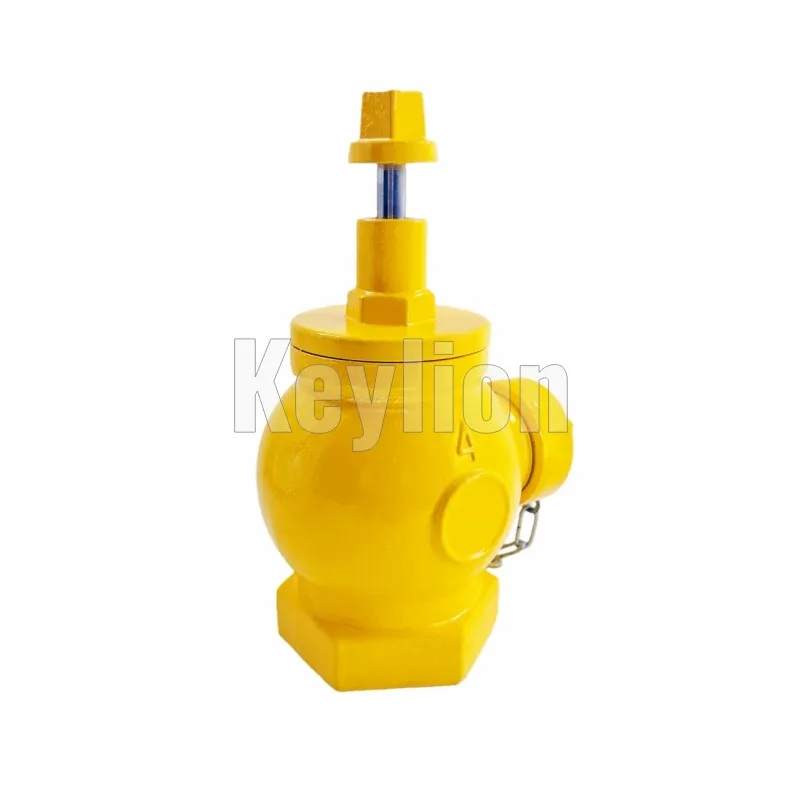
The company has gradually expanded into the production of fire hydrants and has successfully entered the international market. Our products are exported to Southeast Asia, South America, the Middle East, Africa, and other countries and regions, earning the trust and recognition of customers worldwide.
Customization Available
Stainless steel valve stems, bolts, and nuts are available as optional components, depending on your target price and brand positioning.
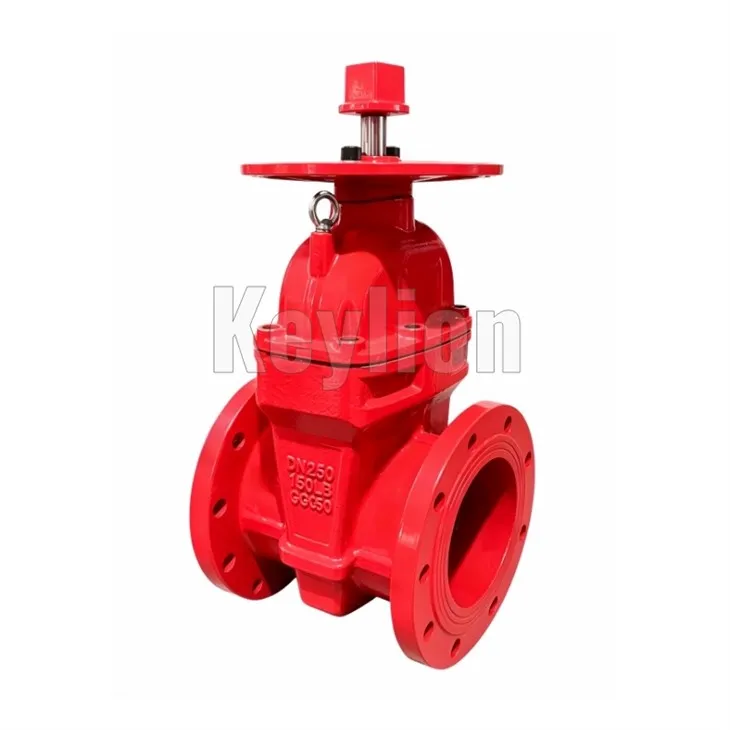
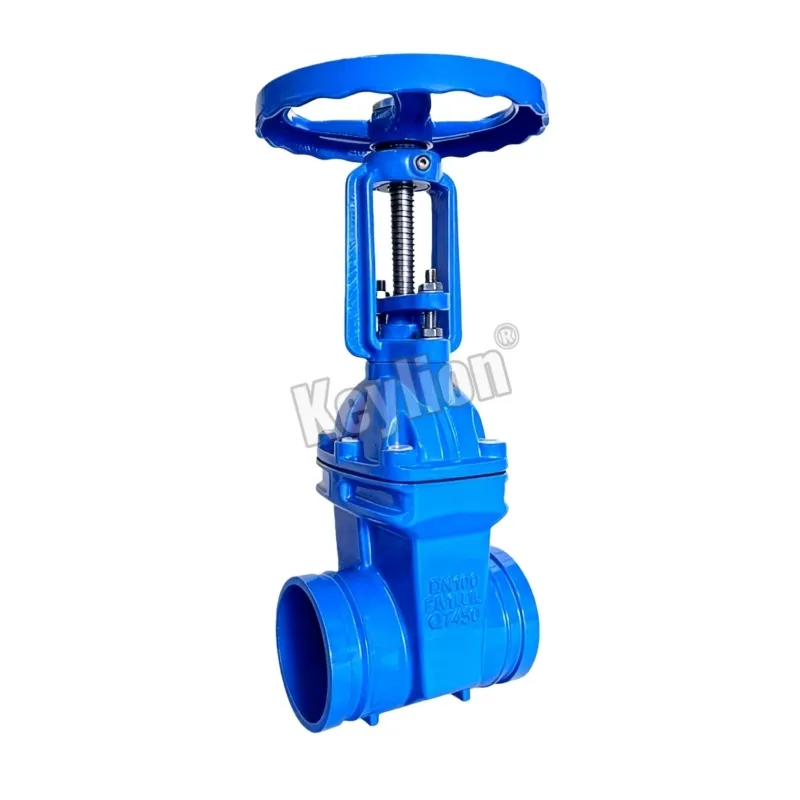
A gate valve is the most common valve for water supply systems. It represents a linear-motion isolation valve and has a function to stop or allow the flow. Gate valves got their name from the closure element sliding into the flow stream to provide shutoff and, therefore, acting like a gate. Gate valves are used to isolate specific areas of the water supply network during maintenance, repair works, new installations, as well as to reroute water flow throughout the pipeline.

Product Parameter
| Product Name | Cast Iron Flanged Gate Valve |
| Connection | Flange End |
| Body Material | Ductile Iron |
| Standard | ANSI/GB/BS |
| Size | DN50,DN65,DN80,DN100,DN125,DN150,DN200,DN250,DN300 |
| Working Pressure | PN10,PN16,PN20,PN25 |
| Color | Red/Blue |
| Working Temperature Range | 0℃ to 80℃(32℉ to 176℉) |
| Surface Finishing | Epoxy Paint Coating |
| Application Medium | Water |
Material
|
Part |
Material |
|
|
Standard |
Optional |
|
|
Body |
Ductile Iron QT450-10 |
|
|
Stem |
2CR13 Stainless Steel |
201 Stainless Steel |
|
Bonnet |
Ductile Iron QT450-10 |
|
|
Handwheel |
Ductile Iron QT450-10 |
|
|
Disc |
Ductile Iron QT450-10,Covered By EPDM |
|
|
Nut |
Ductile Iron |
Brass |
|
Bolt |
Ductile Iron |
Brass |
|
O-Ring |
NBR |
EPDM |
The key characteristics of a gate valve are
Gate-like Component
A gate valve uses a gate-like component to control flow. The gate is typically a flat disc or a wedge that slides up and down perpendicular to the flow.


Leakage and Wear
When fully opened, the gate is completely removed from the flow, creating minimal pressure drop across the valve.
Operation
Manually operated gate valves are operated by turning a handle or a wheel, which moves the gate up or down via a threaded stem. Typically, when the gate is lifted, it allows fluid to pass through. When the gate is lowered, it blocks the flow.


Not for Throttling
These valves are not suitable for throttling (regulating flow by partially opening and closing) because accelerated flow through the partially open gate causes damage to the gate and sealing components.
Use Cases
Gate valves are typically used in applications where a straight-line flow of fluid and minimum restriction is desired. Gate valves are used in on/off applications where the valve is either completely open or completely closed.


Design Variants
Gate valves can come in various designs. With non-rising stem designs, the gate travels up and down the stem as the stem is rotated. Rising stem valves have the gate and stem moving together as the stem is rotated.
Properties of Gate Valves


Ability to Handle High Pressures and Temperatures: The oil and gas industry often involves high-pressure and high-temperature environments. Gate valves are robust and can be designed to withstand these extreme conditions, making them suitable for critical applications in upstream, midstream, and downstream processes.
Minimal Pressure Drop: When fully open, a gate valve provides a straight path for the flow of fluid, resulting in minimal pressure drop across the valve. The open gate provides full bore access to the wellhead for the passage of tools and downhole equipment.
Tight Sealing: Gate valves offer a tight seal when closed, which is essential for preventing leaks. This is particularly important in the oil and gas industry, where leaks can have serious safety, environmental, and economic implications.
Low Turbulence Flow: The design of gate valves allows for a smooth and uninterrupted flow when the valve is fully open, reducing the risk of turbulence which can be detrimental in certain pipeline applications.
Suitability for Slurry and Viscous Fluids: The full-bore design of gate valves makes them suitable for handling slurry and viscous fluids, which are often encountered in oil and gas operations.
Isolation Purposes: Gate valves are ideal for on/off control of the fluid flow, which is necessary for isolation purposes at the wellhead during maintenance, emergencies, or other operational requirements in oil and gas applications.
Durability and Longevity: These valves are designed for longevity and durability, which is essential in the oil and gas industry where equipment needs to operate reliably over long periods under harsh conditions.
Adaptability to Different Materials and Coatings: Gate valves can be made from a variety of materials, including carbon steel, stainless steel, and alloy steels, which can be selected based on the specific application. They can also be coated or treated to resist corrosion, which is a common challenge in the oil and gas industry.
Compliance with Industry Standards: Gate valves used in the oil and gas industry are manufactured and tested according to stringent industry standards, ensuring safety, reliability, and performance.
Sizing Ranges

Nominal Size Range: Gate valves are available in a broad range of sizes, from small valves (less than an inch in diameter) for home plumbing systems, to very large valves (up to several feet in diameter) used in major industrial and municipal applications.
Pipe Size Compatibility: The size of a gate valve is usually expressed in terms of nominal pipe size (NPS) or diameter nominal (DN). This sizing is designed to match the standard sizes of pipes.
Industry Standards: The sizing and dimensions of gate valves are often standardized according to industry norms and standards, such as those set by the American Petroleum Institute (API), the American National Standards Institute (ANSI), the International Organization for Standardization (ISO), or other national and international bodies.
Pressure Rating: Along with size, gate valves are also rated for pressure. The pressure rating, often indicated as Class (like Class 150, Class 300, etc.), determines the maximum pressure the valve can handle at a certain temperature.
End Connections: The end connections are the parts that connect to the piping, also vary in size and type. Common types include flanged ends, threaded ends, and butt-weld ends, and they must be compatible with the pipe’s connection type.
Application-Specific Designs: In specialized applications, there may be custom-sizing designed to fit specific requirements, such as in certain types of machinery, specialized industrial processes, or unique piping configurations.
Types of Gate Valves
Solid Wedge Gate Valve
A solid wedge gate valve is a type of gate valve that features a solid, one-piece wedge-shaped disc or gate that moves up and down to control the flow of fluids through the valve. The wedge disc in a solid wedge gate valve is typically a single, unsplit piece, providing a continuous surface across the flow path when the valve is fully open. It is also less likely to leak than other types of gate valves.
Split Wedge gate Valve
Split wedge gate valves are a type of gate valve that employs a wedge-shaped disc or gate, which is split into two separate parts. Unlike solid wedge gate valves, where the wedge is a single, unsplit piece, split wedge gate valves have a design where the wedge is divided into two segments. This split wedge design allows for flexibility and accommodation of any misalignment that may occur during operation.
Parallel Slide Gate Valve
Parallel slide gate valves are designed with disks that slide in a track up and down. Due to their inability to withstand high pressure, parallel slide gate valves are commonly used in low-pressure applications. Because they are not able to withstand high pressures, parallel slide gate valves are often used in low-pressure applications.
Flexible Wedge Gate Valve
A flexible wedge gate valve has a disk connected to the stem by two hinges, which allows it to move up and down side-to-side. Because it is able to withstand higher pressures than other valves, flexible wedge valves are often used in high-pressure applications.
FAQ