






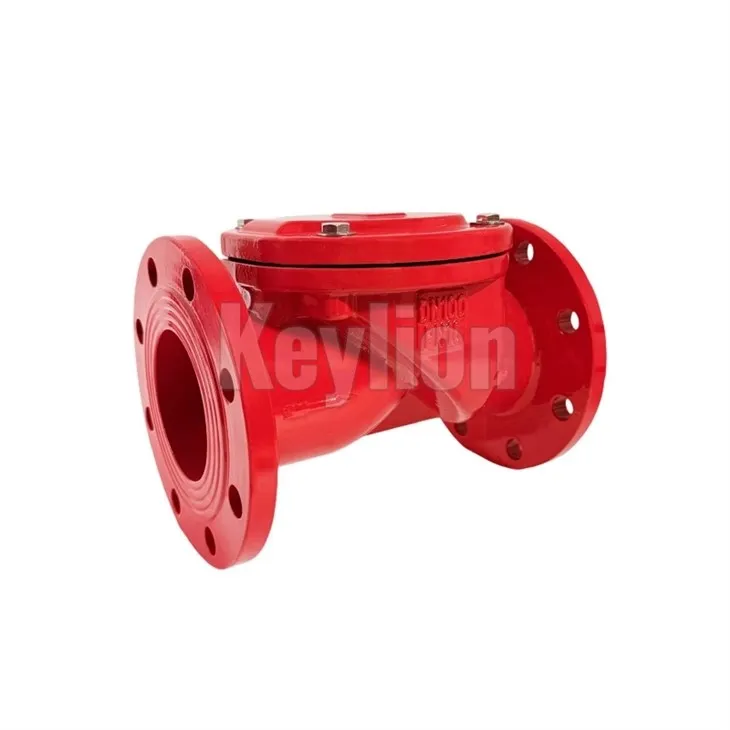
Rubber Flap Check Valve
Products Description
Rubber flap check valve is built to handle tough daily operations in municipal drainage, building water systems, wastewater treatment and general industrial pipelines. Its rugged ductile iron construction ensures stability under pressure, while the self-actuated rubber flap eliminates the need for power or manual control. This valve effectively prevents water hammer and pipeline backflow, reducing maintenance needs and improving system safety. Easy to install and highly cost-efficient, it has become a popular choice for engineers and contractors across various civil and industrial projects.
Core Technical Parameters
| Model | Nominal Diameter | Working Pressure | Body Material | Seal Material | Coating | Connection Type | Installation | Working Medium |
| H44X-10 |
DN50(2'') DN65(2.5'') DN80(3'') DN100(4'') DN125(5'') DN150(6") DN200(8'') DN250(10'') DN300(12'')
|
PN10(1.0MPa) | Ductile Iron | EPDM Rubber Flap | Red/Blue Epoxy Powder | Flange End |
Horizontal (Flow Up) / Vertical ( Flow Up) |
Fire Fighting Water Clean Water Sewage |
| H44X-16 | PN16(1.6MPa) | |||||||
| H44X-25 | PN25(2.5MPa) |
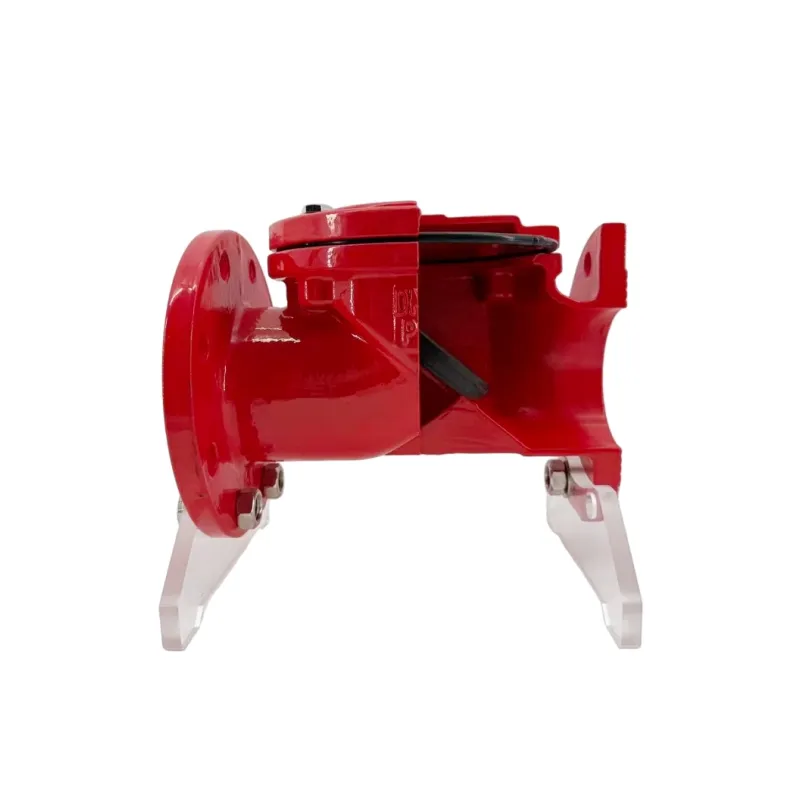
Working Principle
This swing check valve operates automatically using fluid pressure. Forward flow pushes the disc open, allowing smooth passage. When flow stops or reverses, the disc closes tightly against the seat to block backflow. It protects pumps and pipelines from water hammer and damage without any external power.
Installation
Make sure the pipe is clean before installation. Any sand or debris inside the line can damage the rubber flap and cause leaking.
Check the flow direction arrow on the valve body. Install the valve only in the marked direction - do not install it backwards.
Use standard flange connections and tighten bolts evenly in a cross order. Uneven force may lead to flange leakage.
This valve can be installed horizontally or vertically. Both positions work well for normal water and sewage systems.
Maintenance
Check the rubber flap every 6 to 12 months. Look for cracks, hardening or wear that may affect sealing.
When the flap is worn, you only need to replace the flap itself, not the whole valve. This saves cost and time.
Clean dirt or buildup from the valve interior regularly to keep it opening and closing smoothly.
Do not use the valve with strong chemicals or over-temperature liquid, as this will shorten the service life.
Hot Tags: rubber flap check valve, China rubber flap check valve manufacturers, suppliers, factory
Previous
3 Inch Flanged Check ValveYou Might Also Like


Send Inquiry